
Natural Gas with CCS: Technology and industry perceptions & affiliations
CCS faces skepticism from a variety of stakeholder groups
Details
Core information and root causes
Context
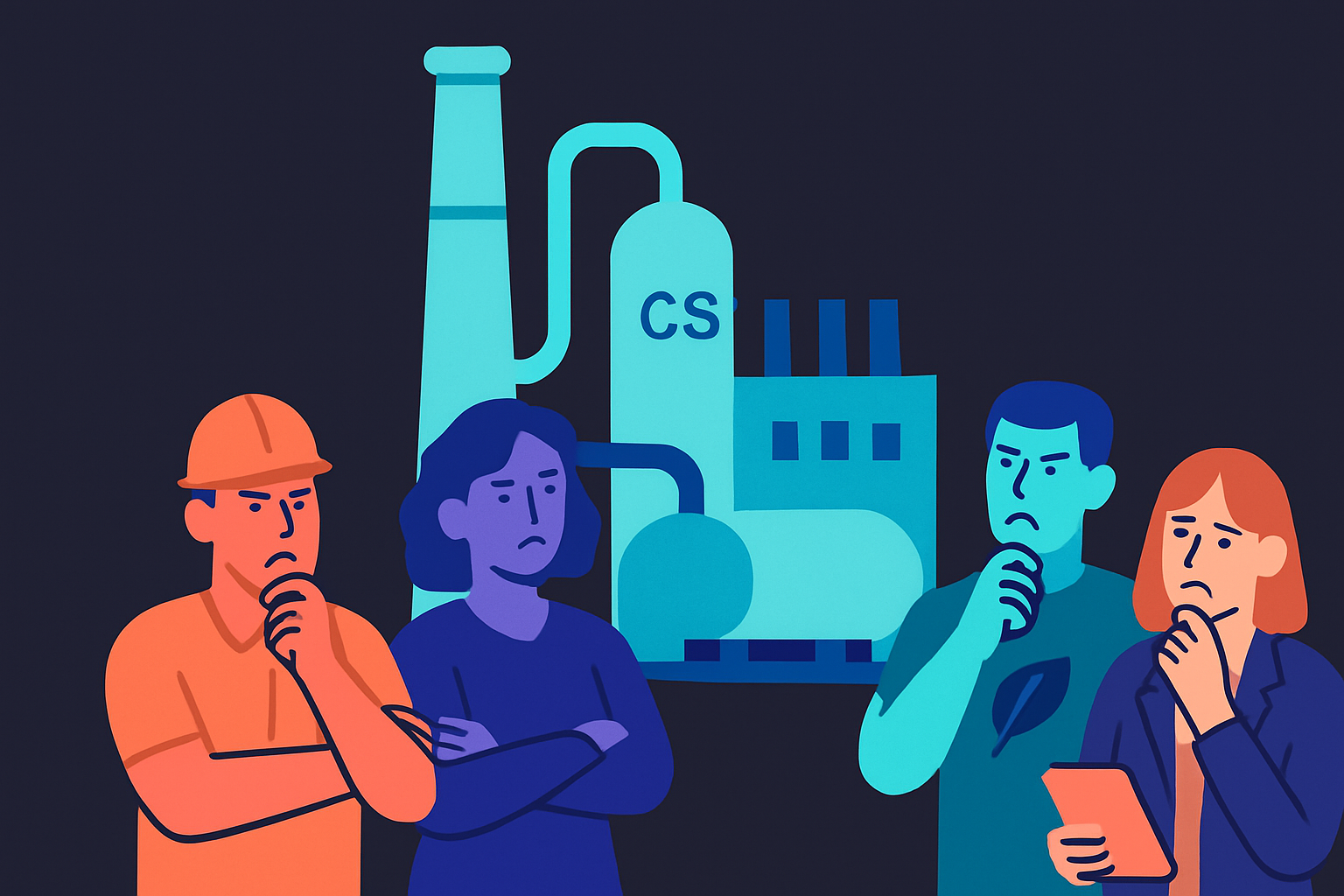
The underlying category of “Natural Gas with CCS” faces criticism (or at the least, a lack of support) from some camps within the environmental movement and from some industry groups that give little or no credence to the importance of CO2.
Part of the criticism stems from disagreements about the role of CCS within the energy transition and reticence to engage with the oil & gas industry, creating the potential for reputational risk for companies considering CCS as an option.
Industry Observations & Insights
“There's a huge amount of built up mistrust in the environmental community around carbon capture. And for good reason: we've had 25 years or more of promises that have not been met, and so any commitment is going to be met by real skepticism.”
“From a financial institution's perspective, it's hard to come up with a good model for any sort of preferential financing or anything like that because the CCS part itself would be in scope for things like our sustainable finance targets (and other things that people in the bank are incentivized to do) but you're not going to get a green bond for a gas plant. The types of investors that are typically interested in low carbon investments are also probably not going to want to invest in a gas plant, and the folks that don't feel strongly about carbon are not going to care as much about the CCS part. So there are some missing incentives in the middle for somebody who is thinking, "I understand we need gas: let's make sure that it has CCS" -Financial Industry Leader
“A lot of philanthropy views CCS as the antithesis to not only renewables, but system level decarbonization because they view it as an extension and a lifeline for fossil fuels. It's not a choice between renewables and natural gas with CCS; it's a choice between a massive, enormous build-out of unmitigated natural gas or natural gas with CCS.”
“Why would you do this if climate change is not a problem? Why would you invest in all these efforts? We should just produce the product and move on and force our allies and importing countries and companies to suck it up and buy our product. And if they don't like it, we'll slap trade sanctions on them. That's one side.
The other side is: anything you do to improve the production, distribution, and ultimate end use of fossil fuels (or feedstocks from fossil fuels), that reduces the relative carbon intensity – that's just putting lipstick on a pig. And all you're doing is enabling this system that some people would say is immoral, and certainly harmful. From their perspective this is just perpetuating it.
When you have these two extremes, what's lost is the folks in the middle that are actually trying to solve a problem that you solve incrementally over decades.”