
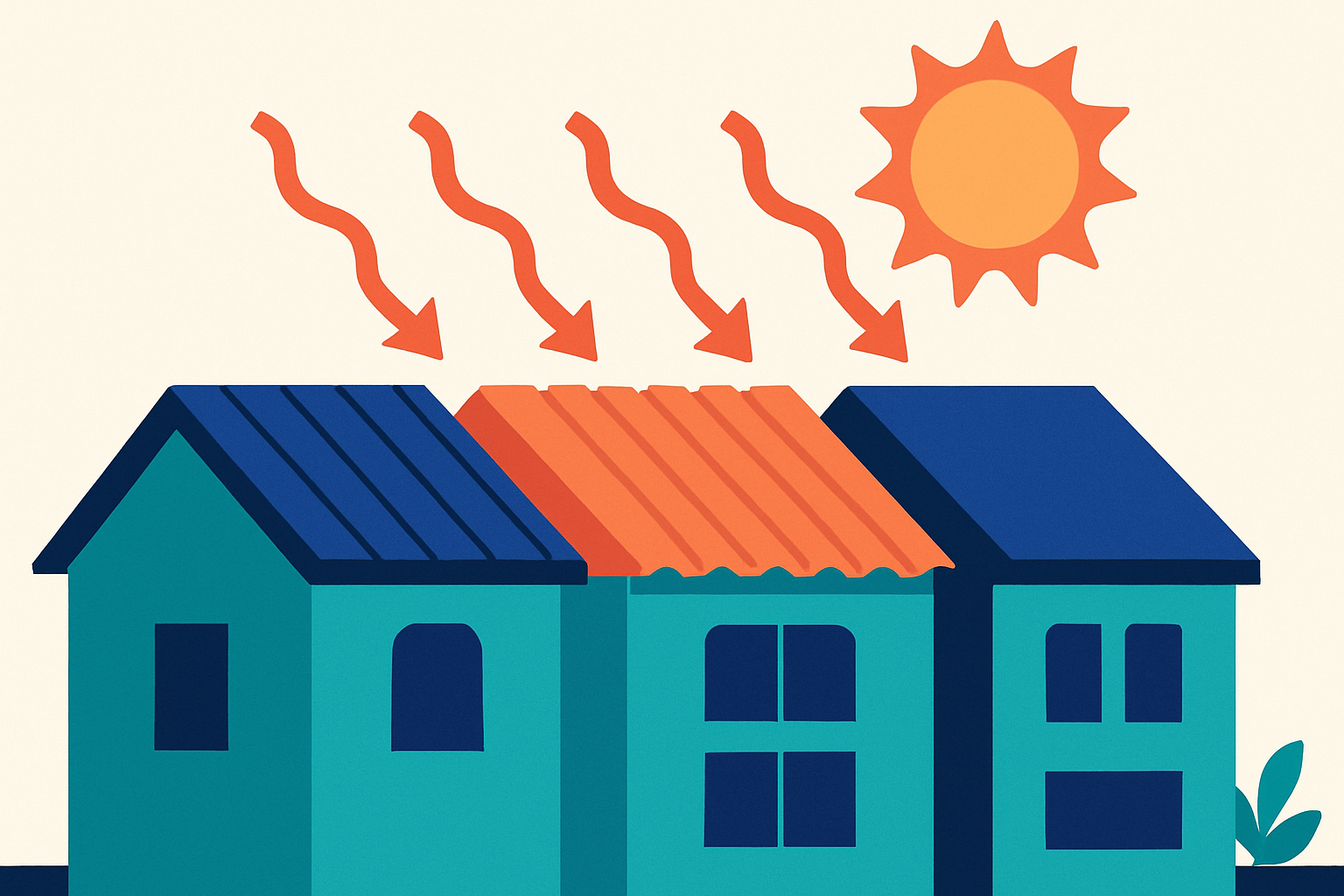
Materials commonly used for roofing can cause excess heating
Materials used for roofing cause excess heating within buildings and the surrounding area
Details
Core information and root causes
Affected Populations
Without concerted action, 8.3 billion people globally — 74 percent of the projected global population — would be exposed to deadly heat conditions (more than 20 days during the year in which ambient air temperature and humidity cross survivability thresholds when body core temperatures exceed 37°C) by the end of the century, up from 30 percent today. The vast majority will be in low-income countries, with 1.1 billion in India alone. Even with major emissions reductions, 48 percent of the global population will be at risk.
In many of the world’s hottest countries, the majority live without air-conditioning — and the ability to escape life-threatening heat. Many of these deaths will occur in informal or self-built settlements, home to over 1 billion people worldwide. Indoor air temperatures in these communities have been found to be a median of 3.6°C (6.6°F) higher than outside. The corrugated tin and asbestos sheet roofs commonly used in these settlements have been associated with significantly longer and more severe periods of indoor heat stress. - from the Third Derivative Report "Really cool roofs: How breakthrough materials can save lives, carbon, and money in a warming world"1
Context
"Cool Roofs" represent a range of technologies and solutions that optimize solar reflectance and/or thermal emittance, and they may be incorporated directly by the manufacturer or applied to existing rooftops.
On a hot day, a black roof can reach over 150°F (66°C), radiating heat into the building below, as well as the surrounding area.2
Per Third Derivative:
Cool roofs typically take the form of a reflective paint or coating, which can reduce roof surface temperatures by 12-31°C (22-55°F), translating to a reduction in indoor air temperatures of between 2°C and 4°C (4-7°F). That is a significant — potentially even lifesaving —difference to a person living or working in a poorly designed or poorly insulated building where temperatures are often higher inside than out. Other benefits include reduced energy costs, reduction in neighborhood temperatures, improved air quality, and extended life of the roofing.
Cool roofs are also cheap; in India, painting a typical informal settlement roof can start at just $30 (compared with the cheapest residential air conditioners priced at around $365 up-front, and which would cost the owner $881 from now through 2030 in upfront and operating costs). Cool roof applications also extend the life of roofs by reducing the warping and cracking caused by high temperatures and providing more protection from moisture.
Considerations
The local climate and site conditions (e.g. roof slope) are important considerations for the potential benefits of a cool roof; in colder climates they may incur additional heating cost. For a in-depth list of the considerations, see the DOE's primer on Cool Roofs.
Approach
Strategic approach and implementation plan
Vectors for approaching this bottlenck
- Increase albedo for existing roofs
- Coatings that can be applied to existing roofs
- Increase albedo for new & replacement roofs
- Fabric PDRC Solutions
”fabric PDRC solutions — like tents — could significantly benefit people in informal settlements and emergency or refugee housing”1
- Improve marketing & commercial branding for roofing products
- Increase education and awareness for Cool Roof benefits
- Research for materials related to solar reflectance and thermal emittance
Resources
Sources, references, and supporting materials
Academic papers, industry reports, and data sources supporting this analysis.
References
Numbered references are automatically generated from inline footnotes (6) throughout the document.
Additional Resources
- U.S. Deparment of Energy: Cool Roofs
- Third Derivative: "Really cool roofs: How breakthrough materials can save lives, carbon, and money in a warming world"
References
- https://www.third-derivative.org/blog/really-cool-roofs-how-breakthrough-materials-can-save
- https://www.cleancoolingcollaborative.org/blog/transforming-indonesia-cities-with-clean-cooling-cool-roofs/
- https://www.rooferscoffeeshop.com/post/sarah-schneider-audrey-mcgarrell-sunsetting-energy-star-in-roofing-podcast-transcription
- https://challengeworks.org/challenge-prizes/million-cool-roofs-challenge/
- https://climateresolve.org/cool-roofs/
- text