

Modern Air conditioning units aren’t optimized for managing humidity
Modern air conditioning units aren’t optimized for managing humidity, which can lead to poor performance and excess costs (particularly in high-humidity regions)
Details
Core information and root causes
Context
Modern air conditioning units aren’t optimized for managing humidity, which can lead to poor performance and excess costs (particularly in high-humidity regions)
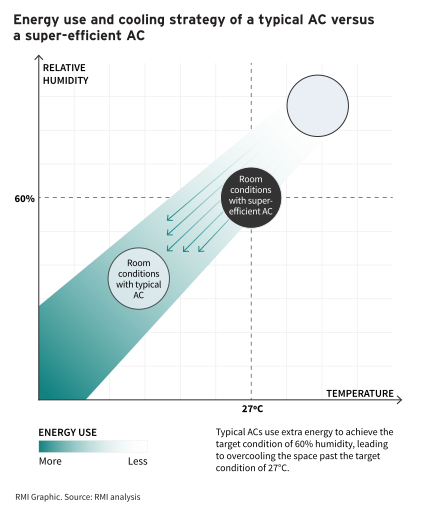
ACs primarily cool the air through “sensible cooling,” which lowers the air temperature. To a lesser extent ACs also dehumidify the air in a process called latent cooling. However, today’s ACs are primarily designed to manage temperature, not humidity, and their dehumidification capabilities are limited. Most of an AC’s energy input goes toward sensible cooling, leaving very little energy available for latent cooling. This energy allocation is largely fixed, leaving users little control over improving the balance between cooling and dehumidification. As a result, today’s ACs are inefficient at managing humidity, leading to either discomfort or high energy bills for people in hot humid climates.
In India, the world’s fastest-growing AC market, this issue is especially pressing due to the large population living in warm and humid zones. A room AC with the lowest first cost is increasingly the choice for many urban consumers due to the affordability and ease of maintenance; however, these are also the most inefficient units when it comes to providing cooling and dehumidification. Many of these units also rely on refrigerants with high global warming potential (GWP), contributing to further environmental harm.
When ACs fail to manage humidity, users tend to overrun the AC and overcool the room to achieve comfort. This results in significantly more energy consumption, straining electricity grids and increasing costs for customers. Current AC testing standards do not capture this excess energy use when rating ACs for efficiency. So, while consumers seek to make conscious, cost-advantageous purchasing decisions by looking at the star label, they do not get accurate information on lifetime energy use and costs associated with today’s AC products.
— from "Bringing Super-Efficient Air Conditioners to the Market" (April 2025)
Related
Connected bottlenecks and relationships
Approach
Strategic approach and implementation plan
Suggestions from Global Cooling Efficiency Accelerator (GCEA)
- Partner with the AC industry ecosystem — including manufacturers, industry associations, and supply chain actors. It is crucial that multiple manufacturers design and develop products that are optimized for real-world conditions.
- Undertake real-world demonstrations to gather performance data, generate evidence, and build market confidence in super-efficient ACs. Data and insights from these demonstrations, along with lab testing, support updates to testing standards and the design of market instruments, all of which would facilitate the initial uptake of super-efficient AC products
- Raise consumer awareness to help end-users understand that operating ACs that fail to manage humidity effectively can lead to discomfort and health issues all while increasing their energy bills due to the need for overcooling. This awareness is also essential for policymakers and key market actors — namely, those responsible for policies that shape the industry’s future. These decision makers ultimately shape the market’s approach to cooling.
— from "Bringing Super-Efficient Air Conditioners to the Market" (April 2025)